
01
Deep Scratches
Damage that has cut through the finish and into the wood itself.
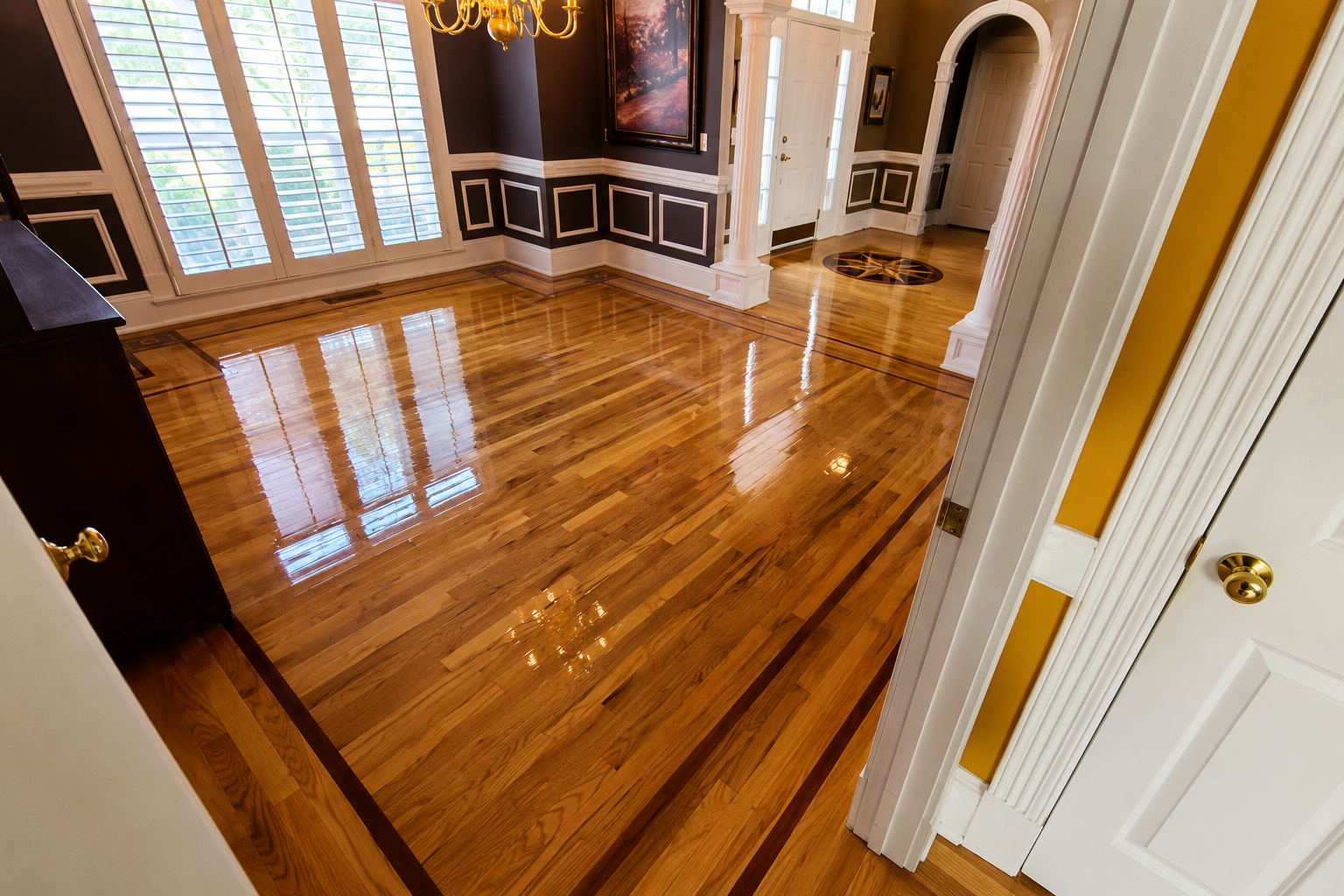
When your floors need more than a screen and recoat, complete sanding can remove deep wear, restore bare wood and give you the option to change the stain color.
Full sanding is generally recommended when the finish and damage go beyond what a maintenance coating can correct.
Damage that has cut through the finish and into the wood itself.
Large areas where the protective finish is gone or the wood is exposed.
Dark staining or discoloration that may require deeper correction.
When you want to move from the existing stain to a noticeably different tone.
Old coatings, sanding marks or widespread finish failure that need to be removed.
Older floors that need repairs, sanding, staining and a new protective finish system.
The exact process depends on your floor, its condition and the finish system selected.
The floor is inspected, the project area is prepared and needed repairs are identified.
The existing finish and stain are removed so the wood can be restored evenly.
Minor repair work and edge detailing are completed as needed.
You may keep a natural look or choose a new stain color for the room.
Professional finish coats are applied to protect the restored wood.
The completed floor is reviewed and care instructions are explained.
The right choice depends on whether the problem is mainly in the finish or deeper in the wood.
Not sure which option fits your floor?
Send us clear photos or a short video and approximate square footage.
If a Screen & Recoat or another less-invasive service can produce the right long-term result, we will explain that option first. Full sanding is reserved for widespread bare wood, deeper damage, major finish failure or a significant color change.
These interior images focus attention on the beauty of finished hardwood floors and can be updated as additional project photography becomes available.


Deep scratches, widespread bare wood, dark stains, major finish failure or a significant color change usually point toward full sanding. Photos and video can often help determine the right direction.
Yes. Because the existing finish and stain are removed, full sanding usually gives you the option to choose a different stain color or a natural appearance.
Timing varies with square footage, repairs, stain choice, finish type and drying conditions. A project schedule is discussed before work begins.
Modern dust-containment equipment can greatly reduce airborne dust, but no sanding process should be described as completely dust-free.
That depends on the finish system and curing conditions. You will receive specific instructions for walking, furniture placement and area rugs.
Some engineered floors can be sanded, while others have a wear layer that is too thin. The product construction and remaining wear layer must be evaluated first.
Send us several clear photos or a short video along with your approximate square footage. We can usually recommend the appropriate service without an initial in-home visit.